Properties flanking livestock grazing lands in Oakdale face persistent parasite pressure as wild brush dries during the hot Central Valley summer. In boundary communities like Bridle Ridge, Sierra Glen, and Hacienda…
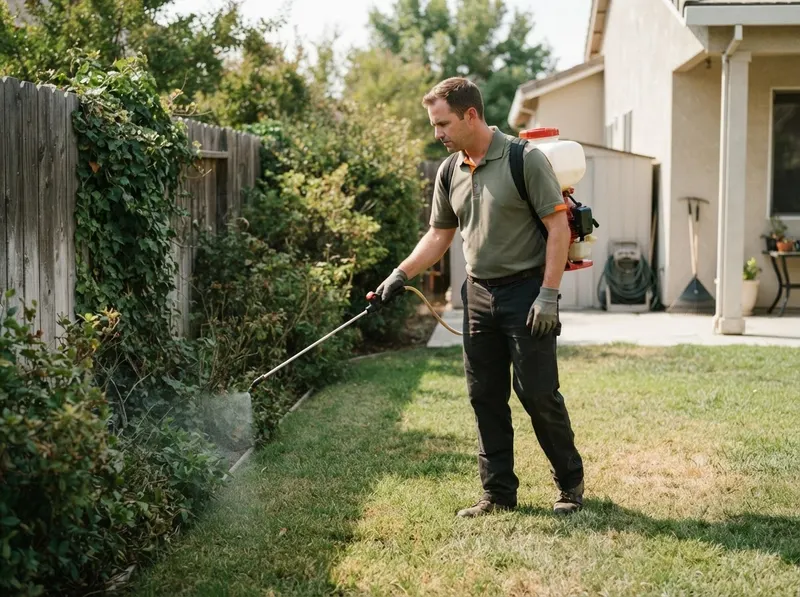
Properties flanking livestock grazing lands in Oakdale face persistent parasite pressure as wild brush dries during the hot Central Valley summer. In boundary communities like Bridle Ridge, Sierra Glen, and Hacienda Estates, irrigated residential turf creates an attractive refuge for migrating pests. Ground-dwelling ticks such as Ixodes pacificus quest on tall dry grass stems, while flea pupae shelter in shady fence lines and dirt footpaths. Standard store-bought concentrates break down rapidly under intense sunlight and rarely stop migration across property lines. An agricultural-edge flea and tick yard barrier forms a fortified buffer zone using water-resistant pyrethroid micro-capsules alongside an insect growth regulator, adhering to guidelines from the California Department of Pesticide Regulation.
Technicians treat the transition corridor between untreated pasture and groomed turf, focusing on perimeter fencerows, outbuilding footings, and shaded windbreaks. To ensure environmental safety around local waterways like the Stanislaus River, applications observe strict non-target restrictions outlined by the Environmental Protection Agency and follow pollinator protection protocols set by the Xerces Society. Treatments avoid flowering plants, honey bee forage, and vegetable beds. Formulations dry completely within 60 to 90 minutes. Once bonded to soil and vegetative thatch, residual compounds remain intact through standard sprinkler cycles, consistent with water quality protections overseen by the California State Water Resources Control Board.
The service sequence operates in three distinct phases:
1. Technicians survey fence lines, dry ditch margins, and shaded pet resting areas to map boundary migration paths.
2. A motorized sprayer applies a low-toxicity liquid barrier along 30 to 50 feet of transition pasture while water-activated granules are applied to thick turf and groundcover.
3. The technician establishes a dedicated 3-foot vertical and 5-foot horizontal foundation shield around the house exterior to stop hitchhiking parasites before they access indoor living spaces.
For suburban subdivisions like Burchell Hill, Treasure Hills, and Downtown Oakdale, the primary vector is often urban wildlife such as raccoons and feral cats, requiring precise spot treatments around decks and foundation plantings under UC IPM guidelines. In contrast, parcels bordering livestock pastures along Oakdale West and Fair Oaks require wide, contiguous boundary broadcasts to handle high tick volumes carried by cattle and deer, in line with surveillance standards from the California Department of Public Health. Every service safely integrates with domestic pet routines following pet welfare advice from the American Veterinary Medical Association and wildlife guidance from the California Department of Fish and Wildlife. Technicians also reference seasonal livestock disease vectors monitored by the California Department of Food and Agriculture to adjust barrier depth during early spring and peak summer migrations.
Every job gets a firm, written price after a free on-site visit.
For standards, safe disposal, and service guidance on PEST CONTROL SEVICE in Oakdale, CA, useful references include U.S. EPA, ENERGY STAR, U.S. Dept. of Energy, Consumer.gov, U.S. Census Bureau, and Google Maps. General consumer and small-business resources are available from USA.gov, Better Business Bureau, FTC Consumer Advice, U.S. Small Business Administration, and Ready.gov.
Tell us about your agricultural-edge flea and tick yard barrier job in Oakdale and we'll send a clear, written quote, usually the same day.
 AmberShield Pest Care